A minimalist tattoo that feels like you: build a better design brief
One flower, three original directions. A visual guide to choosing shape, detail, and placement — then writing a tattoo brief an artist can actually use.
THE SHORT ANSWER
How do I make a tattoo idea more personal?
Choose one subject and why it matters to you, then name the shape, style, and possible placement. Keep those decisions in a short brief. Use concepts to explore alternatives and ask your tattoo artist to refine the final design.
About these images: original editorial illustrations, not generated in InkWorld. These are concept studies, not Try On previews or tattoo-ready stencils.
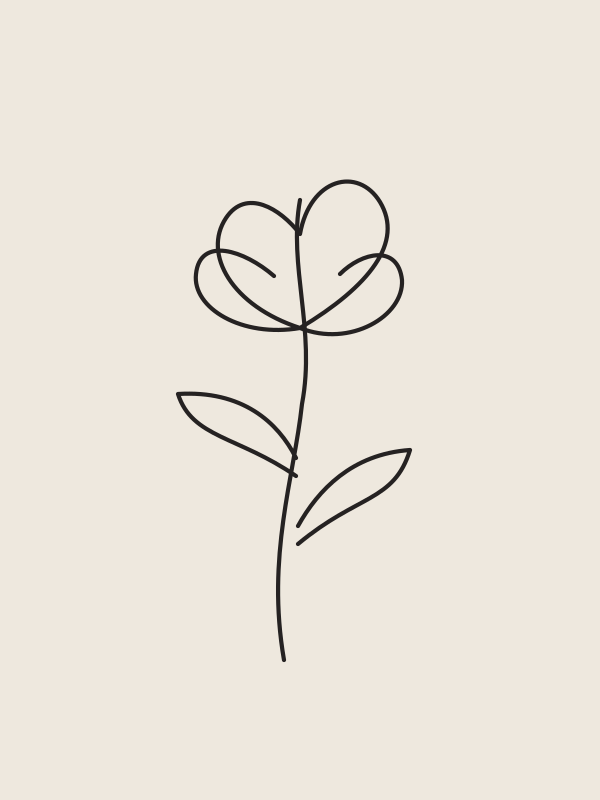
A small tattoo can carry a big story. But 'a minimalist flower' leaves almost every important choice open: the shape, the amount of detail, the direction it faces, and what makes it yours. Instead of collecting another hundred references, use one subject to make a few deliberate decisions. Here is a visual exercise you can finish with a usable brief.
FIELD NOTE / 01
1. Start with a reason, not a trend
Write down one sentence about why you want this subject. It can be specific — the wildflowers beside a childhood home — or simply visual: you like a loose, upward-moving line. You do not need to invent a profound meaning for a shape you love.
For this study, the brief is: 'a botanical reminder to leave room for change.' That is an invented example, not a claim that flowers have one universal meaning. It gives us a useful design test: does the image feel open and alive, or rigid and enclosed?
Keep your personal references separate from someone else's finished tattoo. A photograph of your own garden can explain the subject; a list of visual qualities can explain the style. Ask your artist for an original response rather than a copy.
FIELD NOTE / 02
2. Compare the silhouette before the detail
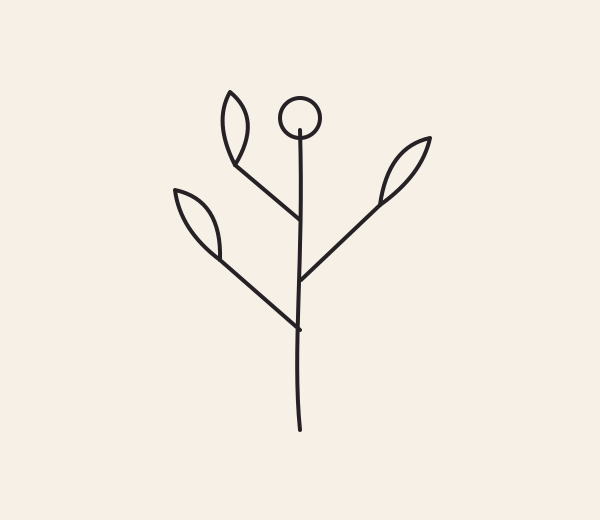
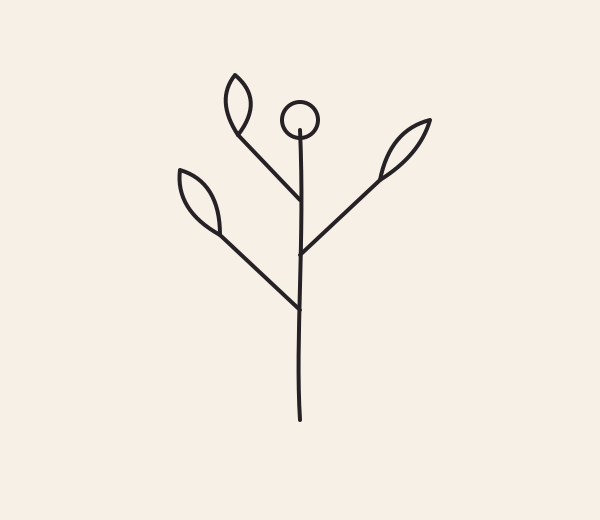
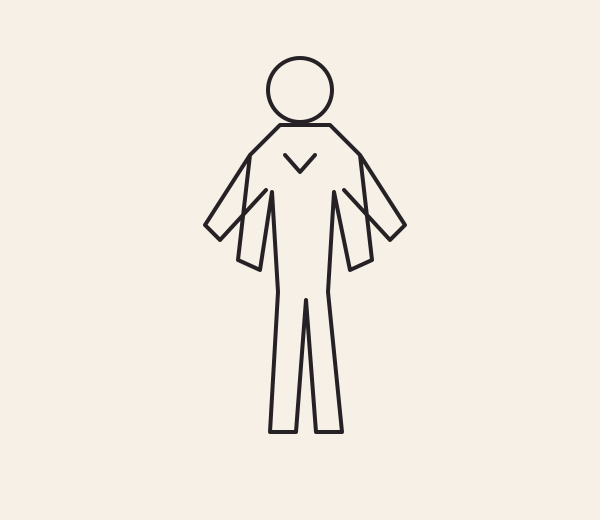
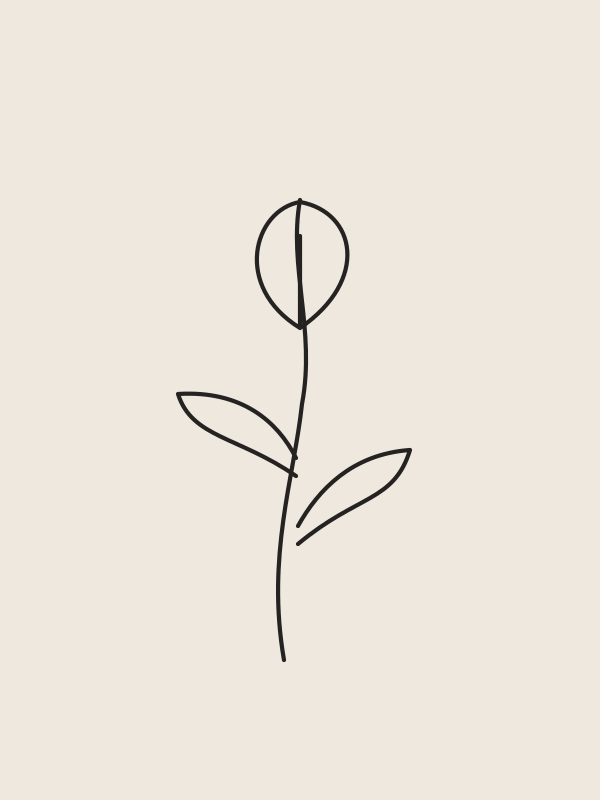
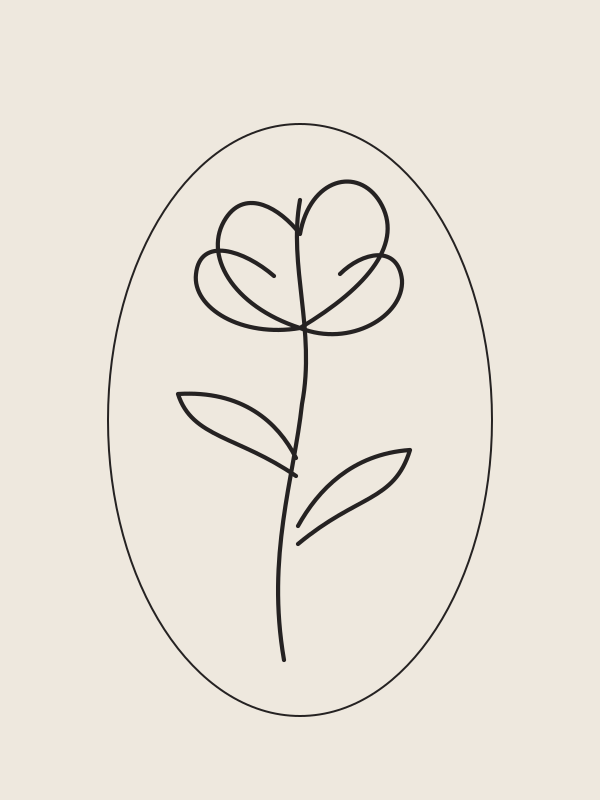
Look at the three drawings above as small shapes, not as finished tattoo designs. The open bloom spreads toward the top. The quiet stem is narrow and restrained. The oval gives the third version a visible boundary. None is automatically more personal or more tattooable.
Cover the captions and ask which shape you would still recognise at a glance. If the answer depends on a tiny interior line, that detail may be doing too much work in your concept. Ask your artist to assess how much information belongs in the available space.
Choose one direction before adding another subject. In our example, the open bloom best matches 'room for change.' We can make it our own through the curve of the stem and the balance of the leaves, rather than adding a date, moon, quote, and butterfly all at once.
FIELD NOTE / 03
3. Define what 'minimal' means to you
Minimalist can describe several different things: a simple outline, very few elements, plenty of open space, or a single visual gesture. It does not automatically mean the smallest possible tattoo or the thinnest possible line.
Pick two or three qualities you can actually describe. For our open bloom: black linework, an uneven organic outline, and clear space between the leaves. We would avoid dense shading and ornamental filler. Those are creative preferences, not technical instructions for needle size or depth.
If the frame attracts you instead, say so explicitly. The oval version turns a free-growing plant into something closer to a botanical specimen. That is a composition decision. It may need a different footprint to preserve the relationship between the flower and its frame.
FIELD NOTE / 04
4. Treat placement as a question to test
Write down a possible placement and a rough amount of space you are willing to give the tattoo. 'Inside forearm, with room to grow vertically' tells a designer more than 'small somewhere on my arm.' Any exact size in your brief is a discussion starting point, not a guarantee.
Try a vertical and a slightly angled composition. Think about which direction feels right when your body is relaxed, and whether you want to see the design yourself or mainly show it outward. Your tattoo artist can help assess how the drawing relates to your anatomy.
InkWorld's Try On can help you explore apparent position and scale. It is a visual preview, not a calibrated measurement, an anatomical fit guarantee, or a prediction of healed ink. Do not infer real-world detail or long-term appearance from a screen overlay. Ask your artist to check the final stencil on your body.
FIELD NOTE / 05
5. Write one prompt, then vary one thing
A useful AI concept prompt describes the subject, the composition, the visual style, and what to leave out. It is not a substitute for a tattoo consultation. Ask for a clean concept on a plain background so you can judge the drawing rather than a dramatic presentation.
Generate a direction, then change one variable at a time: open petals versus a closed bud, a straight stem versus a gentle curve, or a free outline versus a frame. If you change the subject, style, and composition at once, it becomes harder to understand what improved.
The three illustrations in this article are original editorial vector drawings made for this exercise. They were not generated in InkWorld and are not evidence of a particular AI result. Generated concepts can contain malformed petals, awkward joins, or repeated details; inspect them before taking a reference to your artist.
TRY THIS DESIGN PROMPTA minimalist botanical tattoo concept: one open wildflower on a gently curved vertical stem, two separated leaves, black linework, slightly asymmetric petals, generous open space, plain light background. No lettering, no extra symbols, no shading. Intended as a concept to discuss for an inner-forearm placement, not a finished stencil.
FIELD NOTE / 06
6. Take decisions to your artist, not just an image
Save the strongest concept and write down what you like about it. 'Keep the open top and the leftward curve; simplify the petal intersections' is more actionable than 'make this better.' Bring the less successful variation too if it makes your preference easier to explain.
Ask your artist: What size would preserve this idea? Which marks would you simplify? Does this placement support the composition? How should we adapt this to your linework and approach? Your artist, not an AI preview, should decide how to translate the concept into a tattoo.
Leave with a short list of decisions and open questions. You are not trying to eliminate the artist's contribution. You are giving them a clearer starting point — and giving yourself permission to keep exploring before committing to permanent ink.
YOUR TAKEAWAY
Keep the brief.
Change the possibilities.
Copy this starter, fill in your details, and take it into InkWorld or a conversation with your artist.
This copies text only. It doesn't send a prompt to the app, generate an image, or save your edits.
EXPLORE THE APP, KEEP YOUR BRIEF
Take your brief further.
Use your notes to create tattoo concepts in InkWorld, then discuss the possibilities with your tattoo artist.
Try your idea in InkWorld ↗Opens the App Store · iPhone · In-app purchases. Copy your brief first; it won't transfer automatically. The illustrations on this page do not demonstrate app results. Try On is a visual preview, not a prediction of a healed tattoo.
Sources & editorial notes
This original concept exercise is editorial guidance, not medical or professional tattoo advice. A tattoo artist must decide the final size, spacing, placement, and suitability.